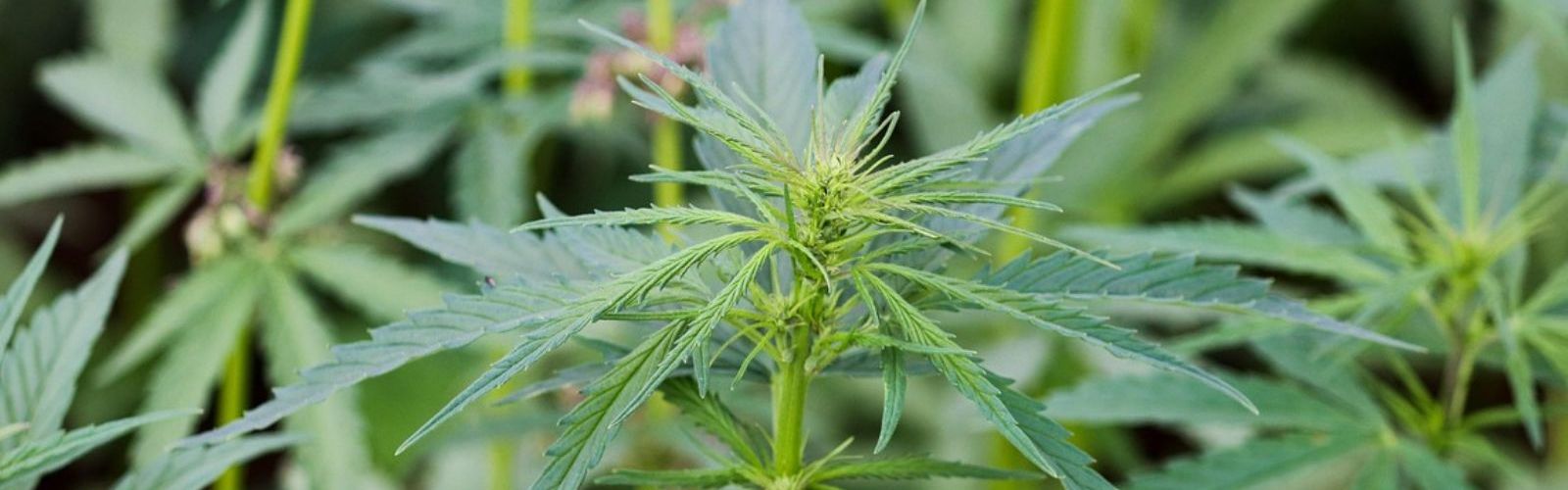
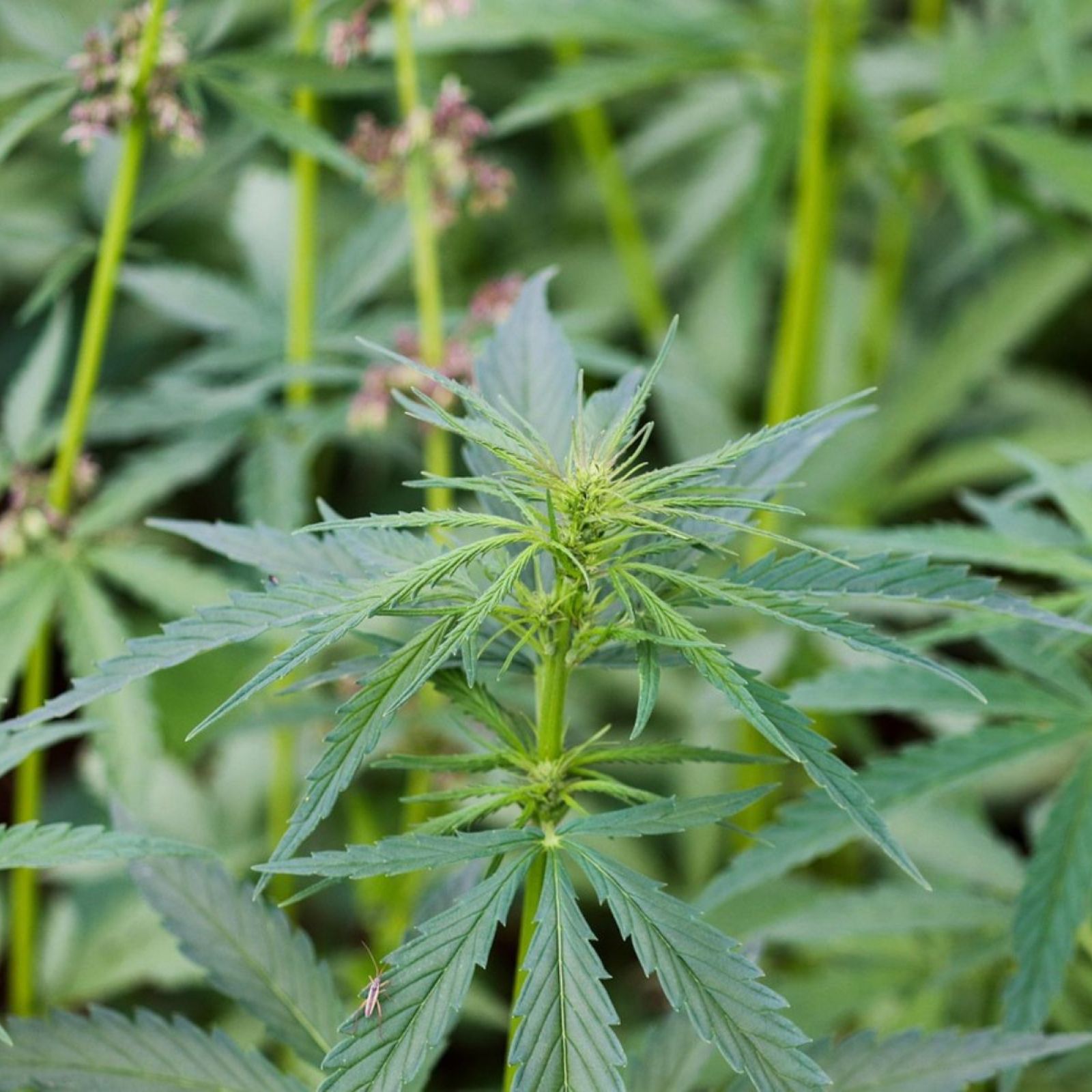
Last year at the International Cannabis Business Conference in Berlin, Germany, I was honored to moderate a panel dedicated to hemp. As I often point out in articles and conversations, the hemp plant is the most versatile crop on the planet, which is why humans have used it for so many things for thousands of years.
In modern times, hemp is used for more things than ever before, including but not limited to food, fiber, medicine, recreational cannabis products, building materials, and bioremediation strategies to clean up toxic sites around the world.
Unfortunately, industrial hemp industry regulations are not always based on science and logical reasoning. One could easily argue that national and regional industrial hemp regulations are rarely based on science and logic, but instead on the whims and misunderstandings of politicians.
One area of public policy where this is readily apparent is the limit on the percentage of THC that a hemp harvest can contain. Ultimately, hemp is cannabis, and cannabis is hemp. However, there is a public policy-based distinction to separate the two, with that distinction hinging on how much THC a harvest contains. If the THC percentage is above the set harvest threshold, it is ‘cannabis,’ and if it is below the threshold, it is ‘hemp.’
If that concept seems silly, it is because it is, yet it carries significant real-world consequences for farmers. It limits what they can do in their fields and greenhouses, and in some unfortunate cases, it can result in entire harvests having to be destroyed if the THC threshold is exceeded.
Demands have increased in Europe for industrial hemp THC limits to be raised, with a recent example coming via the European Industrial Hemp Association’s push to get the European Commission to increase its THC limit to 1%.
“The European Industrial Hemp Association (EIHA) welcomes the EuropeanCommission’s proposalto clarify that all parts of the hemp plant fall within the agricultural framework and reiterates its call for the establishment of a harmonised 1% THC threshold under the ongoing review of the Common Agricultural Policy (CAP) and the revision of Regulation (EU) No 1308/2013 on the Common Organisation of the Markets (CMO).” EIHA stated in a news release this week.
“EIHA strongly supports the Commission’s proposal to ensure that all parts of the hemp plant-including leaves and flowers – are recognised within the EU agricultural framework when derived from authorised varieties.” EIHA added.
The hemp advocacy organization points out that such clarity is important to:
- End persistent legal uncertainty affecting farmers and processors.
- Prevent divergent interpretations among Member States.
- Safeguard the proper functioning of the internal market.
- Provide clarity for investment and innovation across the hemp value chain.
“By recognising the whole plant as agricultural raw material, the Commission takes an important step toward resolving long-standing inconsistencies and ensuring regulatory coherence.” wrote EIHA.
“In parallel, EIHA calls for the establishment of a harmonised EU-wide 1% THC threshold for industrial hemp cultivated under the CAP.” EIHA wrote about raising the THC limit. “The current 0.3% limit no longer reflects agronomic and climatic realities. Natural environmental variations can cause compliant crops to marginally exceed this threshold, exposing farmers to disproportionate sanctions despite good-faith cultivation.”
A 1% threshold would do the following, according to EIHA:
- Provide legal certainty and reduce climate-related crop losses.
- Expand the EU varietal catalogue and improve seed availability.
- Support research, breeding and innovation.
- Align the EU with international standards.
- Maintain the clear distinction between industrial hemp and narcotic cannabis.
“Industrial hemp cultivated below 1% THC remains non-intoxicating and does not present public health risks. Consumer protection continues to be ensured through EU legislation governing THC levels in final products.” wrote EIHA.
“Hemp is a strategic crop for Europe’s green transition and rural development. We strongly welcome the Commission’s proposal recognising the whole plant and call on legislators to complement it with a realistic 1% THC threshold that reflects agronomic reality,” said Francesco Mirizzi, EIHA Managing Director. “We’ll closely monitor the discussion and will keep on advocating for reasonable and science-based measures that can help our sector grow further”.
Many of those points were echoed by a coalition of farmers’ associations and advocacy organizations in Germany, who are also calling on the industrial hemp THC threshold to be increased to 1%, among other demands.
“The Federal Ministry of Agriculture, Food and Community (BMLEH) has responded to a joint request from several associations, including the German Farmers’ Association (DBV) , the German Cannabis Industry Association (BvCW) , the Central Horticultural Association (ZVG) , the Federal Association of German Tobacco Growers (BdT) , and the Federal Association for Sustainability (BVNG) , regarding the regulation of industrial hemp. Specifically, the associations are calling for the legalization of industrial hemp cultivation in greenhouses, the urgent removal of the intoxication clause, and an increase in the THC limit to 1.0%. In the BMLEH’s response, Parliamentary State Secretary Silvia Breher emphasizes that the Ministry is committed to reducing bureaucracy in industrial hemp cultivation but is not currently planning any unilateral national measures.” The German Cannabis Industry Association (BvCW) wrote in its newsletter this week (translated from German to English).
“The Austrian Federal Ministry of Food, Agriculture and Consumer Protection (BMLEH) intends to examine these concerns during the negotiations on the EU’s Common Agricultural Policy after 2027. The BMLEH is not currently planning to raise the permissible THC limits above 0.3 percent. Varieties with higher THC content that are not listed in the EU variety catalogue may neither be sold nor cultivated on eligible land. In addition to reforms already implemented, the abolition of duplicate reporting requirements for farms is currently being reviewed.” BvCW added.
“In a meeting at the BMELH, the BvCW and other industrial hemp associations made it clear that the intoxication clause in particular is independent of EU law and that its abolition should therefore take place as quickly as possible in order to reduce the resulting great legal uncertainty, which continues to slow down investments in industrial hemp.” BvCW concluded.
It is worth noting that South Africa’s Department of Agriculture raised its industrial hemp THC threshold to 2% late last year, and no major negative issues have resulted from the regulatory change. If South Africa can implement a THC threshold that is double what is being proposed in Europe, there’s no valid reason why the European Commission can’t implement a 1% THC limit.
Share article