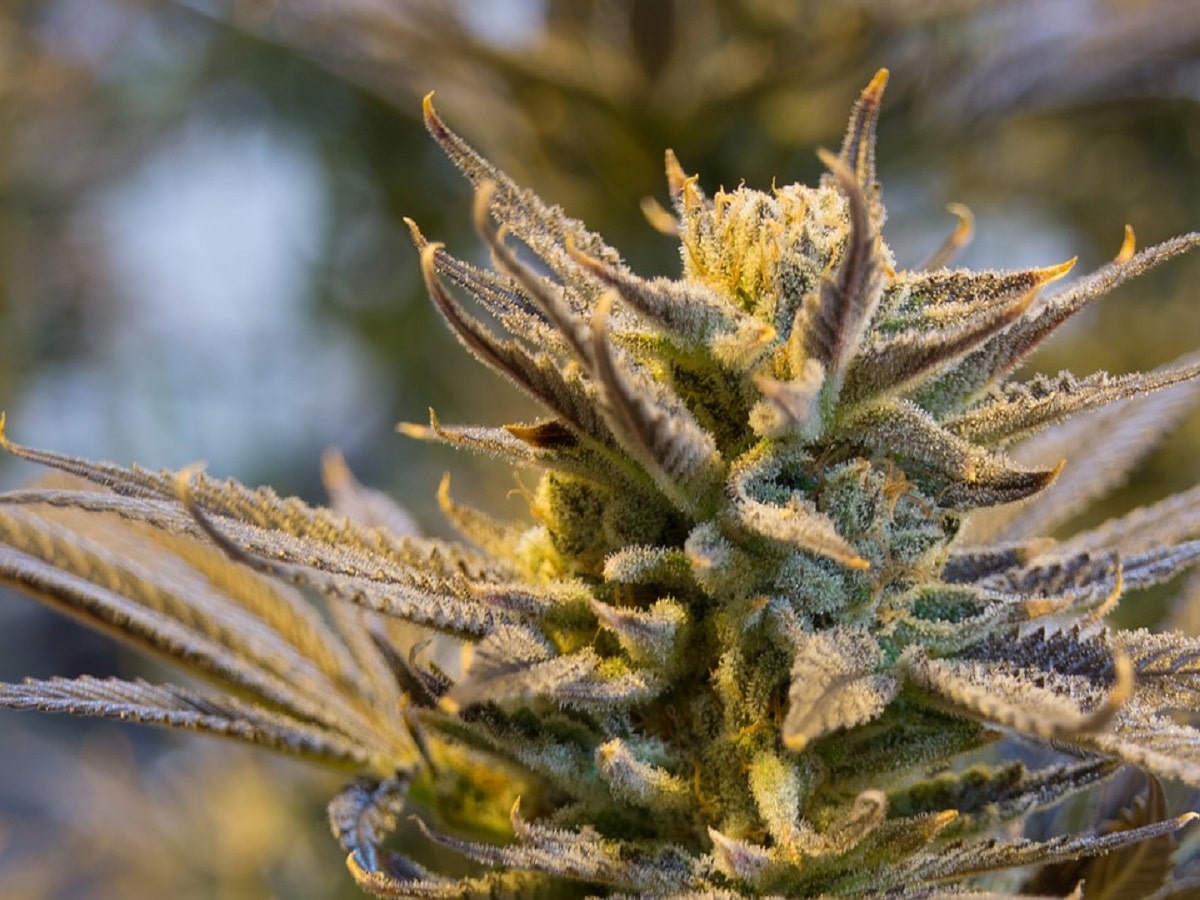

The legal cannabis industry in the United States is expected to experience increased revenue in 2026, according to a new market analysis published this week by Whitney Economics (WE). The projected increased revenue comes amidst an evolving cannabis policy landscape in the U.S.
“We are forecasting 2026 legal revenues to be $30.5 billion, an increase of 4.9% since 2025,” WE founder and Chief Economist Beau Whitney said in a press release. “This is a welcome rebound from just a year ago, when the U.S. legal cannabis market experienced its first year-over-year revenue decline in the legal regulated market’s history.”
Currently, two dozen states in the U.S. have adopted adult-use cannabis legalization, with most of them having launched regulated recreational cannabis sales. A notable holdout from the perspective of regulated adult-use cannabis commerce is Virginia, which adopted a legalization measure in 2021, but isn’t expected to officially permit recreational sales until next year after lawmakers finally approved a commerce bill earlier this month.
In addition to the two dozen states that have adopted adult-use legalization measures, Washington D.C. has also adopted a legalization measure, albeit without permitting regulated adult-use sales. Forty states have adopted medical cannabis legalization measures. Washington D.C. has also legalized medical cannabis, including allowing regulated medical sales.
“In the past, key drivers for forecasting cannabis retail revenues were a function of the number of consumers multiplied by spends. However, with pricing compression becoming such a major factor in the U.S. cannabis market, forecasts need to account for the deflation in the market, and WE has since updated its model to incorporate pricing declines.” Whitney Economics stated in its press release about its methodology.
“During a period of uncertainty and higher inflation, consumers are no longer adding to their basket; instead, they are buying only what they need and applying any savings to other non-cannabis related purchases,” Beau Whitney said. “As a result of this shift, for the first time, pricing compression has become a major variable in the cannabis forecasting equation.”
“We are approaching the point where growth rates of legal participation are slowing while price declines have accelerated,” Whitney said. “As a result, pricing compression will play a major, increasing role in the value of the market moving forward. This is a sign of market maturity.”
“Despite the significance of the pricing compression, the U.S. legal cannabis revenue forecast still indicates growth for the remainder of the decade. But considering the decline in prices, legislatures and regulators will be forced to incentivize consumers to participate in the legal marketplace; otherwise, both retail and tax revenue will continue to decline.” Whitney Economics wrote in its press release.
“Perhaps this will involve moving away from the marijuana dispensary model and open up sales via other distribution channels such as grocery stores and big-box retailers,” Whitney said. “The U.S. market is at a crossroads, where the market is normalizing and no longer experiencing exponential growth. Single-digit growth will become the norm moving forward.”
A ‘wildcard’ to consider for the United States cannabis industry is the ongoing effort to reschedule cannabis from its current status as a Schedule I substance at the federal level to Schedule III. That historic public policy change will have a significant impact on existing and future cannabis companies, with a major change being the tax savings associated with 280E reform.
Additionally, and connected to looming rescheduling to a degree, are United States-based cannabis companies making meaningful entries into the emerging international cannabis industry. The international cannabis industry is booming by many measures, and historically, U.S. companies have remained on the sidelines due to federal prohibition. Once U.S. companies are allowed to pursue legal international exports, revenues will increase, and the global cannabis industry landscape will be dramatically altered as a result.
Share article